Unit 1 Forresters Business Park 35 Estover Close Plymouth, PL6 7PL

COMET INSULATION ARTICLES

The Unspoken Problem with Poor HVAC Insulation

From student accommodation to schools, factories to hospitals, and almost all other commercial buildings to boot, these days everyone has a HVAC (Heating, ventilation and Air Conditioning) system.  As the demand for year-round climate control has grown, so too has the energy footprint of these systems.

In recent years, the rise in HVAC-related energy use has been especially notable. In the United States, HVAC systems account for approximately 50% of energy consumption within commercial buildings and around 20% of the nation’s total energy use. These figures highlight just how critical it is to optimise HVAC efficiency.  Not only to reduce operational costs, but also to mitigate the environmental impact of our built environment.3

Concerning a recent study undertaken by Chris Ridge of the Thermal Insulation Contractors Association (TICA) as part of a TIPCHECK (Technical Insulation Performance Check) case study, Chris stated “We recently carried out a plant room survey for a client in the hospitality sector. At first glance, it appeared that most of the equipment was insulated and in good condition. However, following a good walk around the plant room I begin to see the many gaps in the system. Most of the valves and flanges were uninsulated. This began to add up to a significant quantity of heat emitting items.” 2

The Scale of Energy Losses

Even a single uninsulated valve can result in significant energy loss—enough over a year to power an electric vehicle for up to 20,000 kilometres.1 When scaled up, the impact is even more striking.  According to TIPCHECK, insulating just 30 valves in a commercial building could deliver annual energy savings of around €8,000 (£6,700), far exceeding the cost of installation.8 

In industrial settings, maintaining process temperatures (sometimes exceeding 600°C) requires substantial energy input. Without adequate insulation, these high temperatures lead to very high levels of heat loss, particularly from exposed equipment and piping.

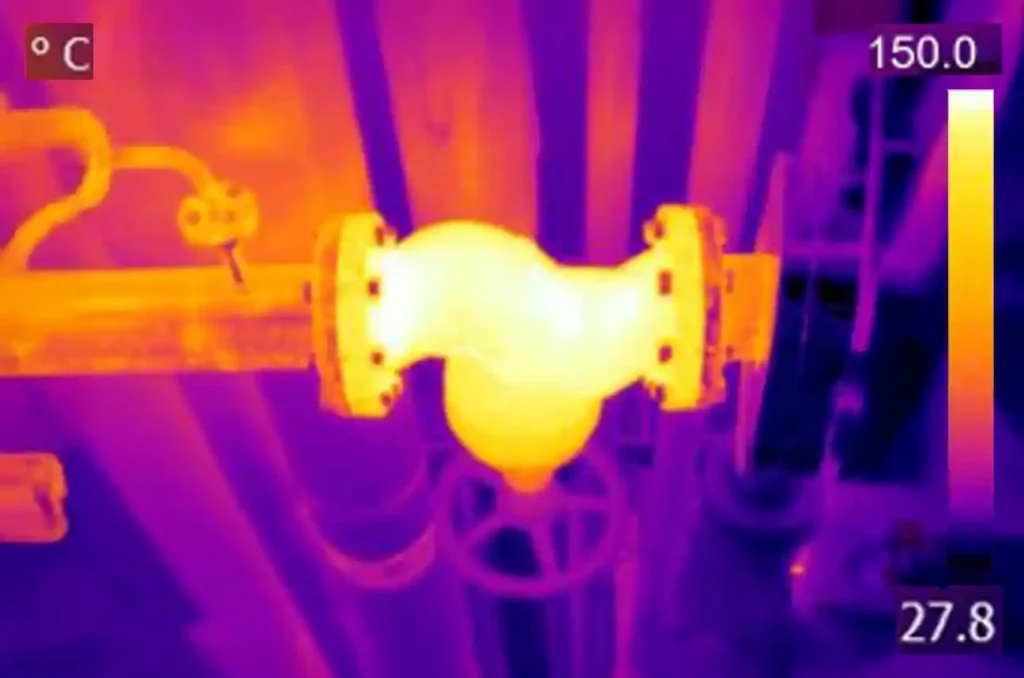
Thermal Image of an Uninsulated Valve 1

Infrared thermography allows us to accurately detect and visualise these losses. When combined with established programs like TIPCHECK, this technology gives building owners a clear understanding of where energy is being wasted. It also reinforces the importance of maintaining high-quality insulation to reduce costs, improve efficiency, and meet environmental targets.

The Need for Insulated Pipe Supports

A common oversight is the omission of insulated pipe supports. While many buildings have basic pipe insulation in place, components like Munsen rings are often used as a cost-cutting measure in place of fully insulated supports. Though cheaper upfront, these uninsulated supports act as thermal bridges, forcing HVAC systems to work harder to maintain temperature, resulting in higher energy consumption and long-term financial losses that far exceed the initial installation savings. Kingspan state that “Kooltherm Insulated Pipe Support Inserts can limit heat loss by up to 4x more than rubber lined pipe clips, 5x more than metal pipe clips and 10x more than hardwood pipe support inserts.”6

Kingspan Kooltherm Insulated Pipe Support 6

This issue is frequently rooted in project design and procurement practices. Mechanical engineers may not always factor in the full lifecycle costs to clients, while thermal insulation contractors may hesitate to recommend more effective, but slightly more expensive solutions for fear of pricing themselves out of competitive tenders.

The result is often a compromised installation, where insulation is simply butted up against metal supports, with only a strip of tape bridging the gap—an inadequate solution that sacrifices performance for short-term savings.

Eliminating thermal bridges through proper specification and installation of insulated supports is a simple yet critical step toward improving energy efficiency, lowering operating costs, and delivering long-term value to building owners.

The Unexpected Cost of Poor Insulation

Poor insulation doesn’t just drive-up energy consumption, it can also shorten the lifespan of HVAC systems. When pipes are inadequately insulated, heating and cooling systems must work harder to compensate for lost energy, leading to increased wear and tear, higher maintenance costs, and premature system failure.

In addition, uninsulated cold pipes are especially vulnerable in humid conditions, where condensation can form on their surfaces. This moisture can seep into surrounding materials, leading to water damage, mould growth, and structural deterioration of walls, ceilings, and floors. These issues not only pose health risks but can also result in expensive repairs that could have been easily avoided with proper insulation.  The figure below shows a run of uninsulated cold air supply ductwork with condensation forming on the surface due to the warmer room temperature.

Sweating Ductwork In A Basement 5

And it’s not just about retaining heat. Insulated pipework also prevents unwanted heat gain from warmer surroundings, helping to stabilise water temperatures and reduce the load on cooling systems—especially critical in commercial or climate-controlled environments

The Environmental Impact of Thermal Inefficiency

In today’s world, poor insulation is more than just a source of wasted energy and higher utility bills, it’s a significant environmental concern. Buildings account for a large share of global energy consumption, and when insulation is inadequate, heating and cooling systems must work harder to maintain comfortable temperatures. This leads to increased greenhouse gas emissions, undermining efforts to reduce a property’s carbon footprint.

For organisations and property owners aiming for net zero, even small, continuous energy losses can accumulate over time, jeopardising compliance with sustainability standards and green building certifications. On a national scale, the combined effect of inefficient buildings can seriously hinder progress toward carbon neutrality targets, delaying climate action and increasing reliance on fossil fuels.

Improving insulation is one of the most cost-effective and immediate steps we can take to reduce emissions, improve energy efficiency, and support broader environmental commitments.

Impact on Thermal Comfort Levels in Buildings

The excess heat given off by HVAC systems can have a knock-on effect on the quality of life of building occupants.  Dr Al-Hafith, a Lecturer in the Built Environment at the University of Plymouth gave his input on this matter. “When HVAC systems are poorly insulated, they can release a lot of excess heat into the surrounding areas. This heat makes the building’s top floors feel uncomfortably warm, especially in places like apartment blocks.  As a result, people may turn on the air conditioning to fix the problem. In other words, they will be using more energy to solve an issue that proper insulation could have prevented in the first place.”4.  

Chris Ridge added “Overheating in buildings connected to heat networks can be a significant issue. We know that Plymouth is earmarked for heat network zoning and the consumer experience regarding heat networks will be significantly improved if overheating is prevented. Thermal Insulation is a key enabler for heat network efficiencies, and it is critical that both thermal insulation specification and workmanship is taken seriously if we are to avoid overheating issues.”2 

Heat networks, also known as district heating systems, provide heating, cooling, and hot water to buildings from a central source, eliminating the need for individual boilers or heaters in each building. They are a crucial part of a sustainable energy future, offering a more efficient and environmentally friendly way to heat homes and businesses compared to conventional individual heating systems. 

The Solution

Achieving energy-efficient HVAC systems requires a collaborative effort across all stakeholders, from clients and mechanical engineers to thermal insulation contractors. Clear communication and a shared understanding of best practices are essential to drive meaningful improvements.

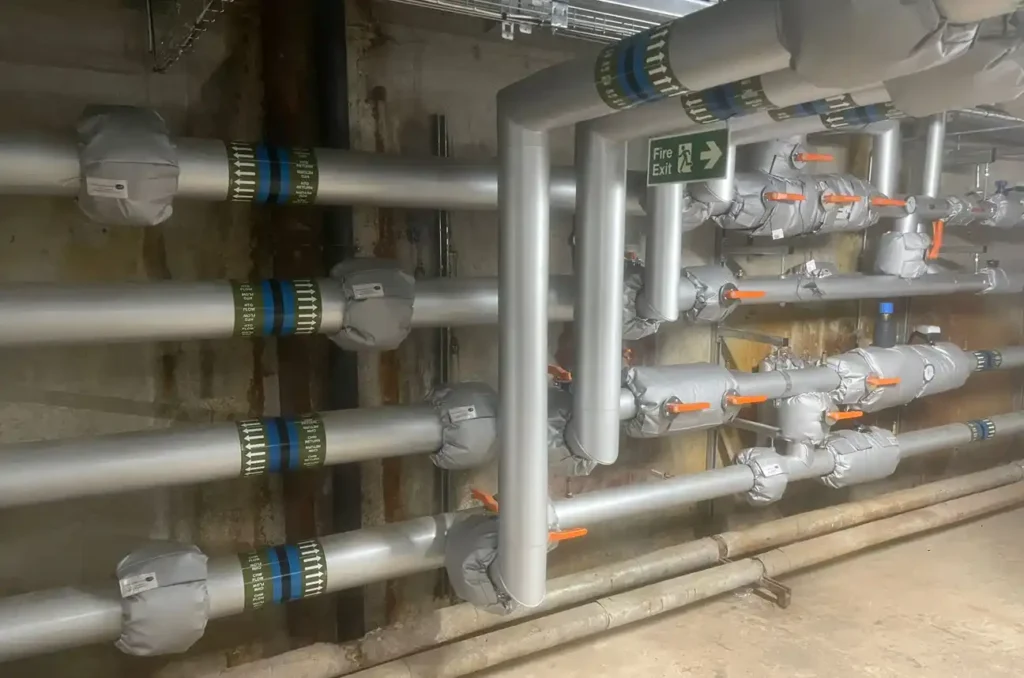
Example of Correctly Installed Insulation 7

This is neither a complex nor an unsolvable challenge. The technology and materials needed to insulate effectively are readily available today. However, delivering optimal results also depends on organisational capability of the specialist contractor, ensuring that teams are not only well-informed but also equipped with the right expertise. Appointing a competent thermal insulation specialist at the design and planning stage is critical. Their input helps to identify opportunities, avoid costly mistakes, and ensure that insulation measures are both effective and compliant with relevant standards.

When applied correctly, insulation offers immediate benefits: reduced energy costs for building owners, improved thermal comfort for occupants, and a measurable contribution to national climate goals. By addressing this avoidable issue, we not only improve building performance but also support the UK’s legally binding commitment to reduce net greenhouse gas emissions by 100% from 1990 levels by 2050. Every well-insulated system is a step closer to a more sustainable built environment.

Author – Paul Kershaw MEng (hons)

Acknowledgements

The author would like to thank the following individuals for their valuable contributions to this article:

  • Chris Ridge, Thermal Insulation Contractors Association (TICA), for providing input and his insight from the TIPCHECK case study.

  • Dr. Omar Al-Hafith, for his expert commentary on thermal comfort impacts in buildings.

  • Gary Haley, for sharing his expertise in the thermal insulation industry and offering valuable insight into the challenges that hinder the proper specification of insulated pipe supports.

References

  1. EIIF – TIPCHECK. Case Study: One Valve Example. Available at: eiif.org
  2. Chris Ridge, Technical Director, TICA: Thermal Insulation Contractors Association. Personal communication, 30 May 2025.
  3. Pérez-Lombard, L., Ortiz, J., & Pout, C. (2008). A review on buildings energy consumption information.
  4. Dr. Al-Hafith, Lecturer in Built Environment, University of Plymouth. Personal communication, 28 May 2025.
  5. Sweating Ductwork: A Larger HVAC Issue. Building Performance Group. Available at: buildingperformancegroup.com
  6. Kingspan. Kooltherm Insulated Pipe Support Insert. Available at: kingspan.com
  7. Site Photograph – Courtesy of Comet Insulation Ltd
  8. EIIF – TIPCHECK. Case Study: Thirty Valve Example. Available at: eiif.org

Share This Article:

Facebook
Twitter
LinkedIn