Unit 1 Forresters Business Park 35 Estover Close Plymouth, PL6 7PL

COMET INSULATION ARTICLES

The Crucial Role of Insulation in Heat Networks

Introduction

As the global push toward net-zero carbon emissions accelerates, countries are exploring innovative ways to transform their energy systems.  Among the most promising solutions is the development of heat networks, also known as district heating systems.  These networks distribute heat from a centralized source to residential, commercial, and industrial buildings through a network of insulated pipes.

Figure 1 - Heat Network Overview7

Heat networks offer substantial environmental, economic, and operational advantages. However, to achieve these benefits, one crucial component must not be overlooked: thermal insulation.  Without proper insulation, even the most advanced heat network will suffer from heat losses, reduced efficiency, and increased costs.

This article explores the benefits of heat networks and delves into why insulation is essential to their effectiveness, sustainability, and long-term success.

What Are Heat Networks?

Heat networks are centralized systems that generate heat in a single location and distribute it to multiple buildings through a network of underground pipes. The heat is usually produced in the form of hot water or steam and can originate from a variety of sources, including:

  • Combined heat and power (CHP) plants
  • Waste heat from industrial processes
  • Renewable sources like biomass or geothermal
  • Large-scale heat pumps
  • Waste incineration


These networks are prevalent in countries like Denmark, Sweden, and the Netherlands and are growing in adoption across the UK and other parts of Europe.

Figure 2 - How Heat Networks Work9

The Key Benefits of Heat Networks

Improved Energy Efficiency

Traditional building-level boilers and electric heating systems tend to operate at lower efficiency levels, especially as they age.  Heat networks, on the other hand, often use more efficient heat generation methods, including CHP plants that can achieve 80–90% efficiency1 by utilizing waste heat that would otherwise be lost.

Carbon Emission Reduction

Heat networks enable large-scale integration of renewable and low-carbon energy sources.  By centralizing heat production, networks can more easily switch to greener fuel sources without requiring retrofits in individual buildings. This facilitates a smoother transition to low-carbon energy, significantly helping cities meet their climate goals.

Lower Operational Costs

Through economies of scale and reduced maintenance needs, heat networks typically result in lower long-term operational costs compared to individual heating systems.  Once installed, maintenance is focused on a few central units rather than hundreds of decentralized boilers.

Figure 3 - Heat Network Energy Flexibility10

Fuel Flexibility

Heat networks are inherently flexible. Operators can diversify fuel inputs over time as technologies evolve, and new renewable sources become economically viable.  This flexibility helps reduce dependency on fossil fuels and shields users from fuel price volatility.

Improved Urban Air Quality

By consolidating heat production in a controlled environment, emissions can be better managed and filtered.  This reduces the number of boilers and chimneys needed in densely populated areas, which contributes to cleaner air and improved public health.

Space Savings for Buildings

Without the need for individual boilers or heaters, buildings connected to heat networks can reclaim space.  This is especially valuable in high-density urban environments where every square meter counts.

The Hidden Risk: Heat Loss in Distribution

While the advantages of heat networks are numerous, their performance hinges critically on one underappreciated factor: heat loss during distribution.  Heat that escapes from poorly insulated pipes represents wasted energy, increased operating costs, and reduced environmental benefits.  In fact, uninsulated or inadequately insulated networks can lose up to 30% of the generated heat2 before it even reaches the end user.  This is where insulation becomes vital.

The Crucial Role of Insulation in Heat Networks

Minimising Thermal Losses

Thermal insulation materials are installed around the heat distribution pipes to reduce heat transfer to the surrounding environment.  Proper insulation can reduce heat loss by up to 90%3, depending on the material, thickness, and installation quality.

Energy Efficiency and Cost Savings

Reduced thermal losses mean that less energy is required to maintain the desired temperatures in the network.  This translates into lower fuel consumption, improved boiler performance, and significant cost savings over the system’s lifecycle.

Even a small increase in heat loss can cascade into disproportionately higher energy demand. For example, a 1% increase in heat loss could require 3–5% more energy input4 depending on system design and load profiles.

Enabling Smaller Pipe Diameters

Insulation allows for a more efficient energy flow, reducing the need to oversize pipes to compensate for losses.  Smaller pipes are not only cheaper to install and maintain, but also require less excavation and disruption during construction.

Operational Stability

A well-insulated network maintains consistent temperatures, reducing thermal stress and extending the life of mechanical components.  This consistency improves user comfort and minimizes the likelihood of system failures or maintenance shutdowns.

Figure 4 - Pre-insulated Hat Network Pipes11

Regulatory Compliance and Green Certifications

With increasing regulations on building energy performance and emissions (e.g., the UK’s Heat Network (Metering and Billing) Regulations and net-zero commitments), properly insulated systems are often necessary to meet energy efficiency benchmarks.  They also contribute to better scores in environmental assessments such as BREEAM and LEED.

Choosing the Right Insulation Materials

Selecting the right insulation depends on a variety of factors including:

  • Operating temperature: High-temp systems (e.g., steam) require materials that can handle intense heat without degrading.
  • Moisture resistance: Insulation should remain effective even in wet or humid conditions, especially in underground networks.
  • Mechanical strength: Materials must withstand pressure from the soil and traffic loads if buried under roadways.
  • Longevity: Durable materials ensure a longer service life and fewer replacements.


Common materials used include:

  • Polyurethane (PUR) Foam: Excellent thermal properties, lightweight, and moisture resistant.
  • Mineral Wool: High temperature tolerance, sound-absorbing, but needs protection from moisture.
  • Cellular Glass: Fireproof, moisture-proof, and very durable, although more expensive.


Pre-insulated pipe systems, often delivered with PUR foam insulation and protective casings, are a popular choice for modern installations.  These systems simplify installation and ensure factory-controlled quality.

Beyond the Main Network

Once the insulated pipework reaches individual buildings, maintaining thermal efficiency is just as critical. Proper insulation of internal distribution pipes, heat exchangers, and plant rooms prevents avoidable heat loss at the final stage. To ensure these high standards are met, it’s essential to appoint a specialist thermal insulation contractor. A trusted contractor not only selects the right materials for each application but also guarantees a professional installation that complies with industry standards and delivers maximum energy savings. By partnering with an experienced insulation specialist, developers and operators can be confident that every metre of pipework is protected to the highest standard, safeguarding performance, reducing costs, and ensuring thermal comfort for the building’s occupants.

Real-World Impact: A Case Study

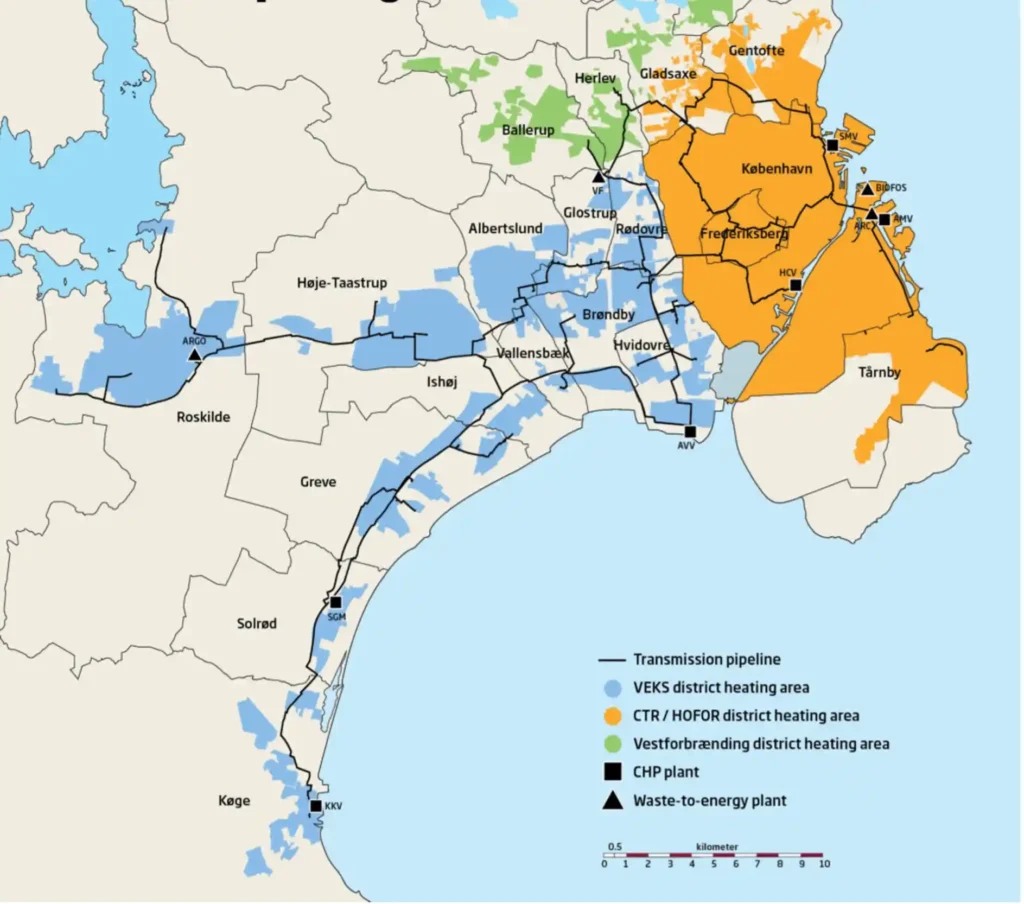
In Copenhagen, Denmark—one of the global leaders in heat network deployment—district heating supplies over 98% of the city.  The networks are meticulously insulated, with annual heat losses kept under 10%, compared to over 30% in less developed systems.

Copenhagen’s system combines biomass, CHP, and waste-to-energy plants, all supported by highly insulated infrastructure.  This network has helped the city reduce carbon emissions by over 40% in the past 15 years, while also maintaining some of Europe’s lowest heating costs.5

This case illustrates that insulation isn’t a luxury—it’s a necessity.

The Business Case for Insulation in Heat Networks

Insulation does involve upfront investment, but the return on investment (ROI) is substantial and long-lasting. Here’s how insulation creates value:

  • Lower Energy Bills: Reduced heat loss leads to lower fuel consumption.
  • Deferred Infrastructure Upgrades: More efficient systems can meet growing demand without immediate expansion.
  • Increased Asset Value: Insulated systems are more attractive to investors, developers, and municipalities due to their predictable performance.
  • Reduced Maintenance Costs: Less wear and tear on boilers and pumps due to temperature stability.
  • Improved Reputation: For public and private stakeholders, energy efficiency demonstrates environmental leadership.


For commercial developers, particularly those managing large office buildings or industrial estates, partnering with properly insulated heat networks can be a competitive differentiator.  As clients and tenants increasingly demand sustainable solutions, participating in or developing a heat network with robust insulation can be a strong selling point.

Figure 5 - Copenhagen’s Heat Network System8

Policy Support and Future Trends

Government incentives and policy frameworks are increasingly supportive of heat networks, especially in the UK, where the Green Heat Network Fund aimed to unlock £270 million in investment between 2022 and 2025.6  One of the eligibility criteria for funding was demonstrated efficiency, including minimal distribution losses—once again underscoring the importance of insulation.

As urban areas grow and the pressure to decarbonize intensifies, we will see:

  • Expansion of 4th and 5th generation heat networks, which use lower temperatures and require even more efficient insulation to function optimally.
  • Smart monitoring technologies integrated into networks to detect thermal losses and insulation failures in real time.
  • Hybrid heating systems, where district heating integrates with building-level heat pumps, demanding greater system coordination and insulation quality.

Conclusion

Heat networks are a cornerstone of a sustainable, low-carbon energy future. They offer compelling benefits for cities, businesses, and residents alike. However, the full potential of these networks can only be realized when thermal insulation is treated not as an afterthought, but as a critical infrastructure component.

By minimizing heat loss, improving efficiency, and ensuring long-term reliability, insulation turns a good heat network into a great one.  For commercial developers, policymakers, and energy planners, investing in high-quality insulation is not just a technical decision, it’s a strategic one that shapes the energy landscape for decades to come.

Author – Paul Kershaw MEng (hons)

References

1 – International Energy Agency (IEA) (2014) Combined Heat and Power: Evaluating the Benefits of Greater Global Investment. Available at: https://www.iea.org/reports/combined-heat-and-power (Accessed: 2 July 2025).

2 – Elsevier (2004) Heat Distribution Network. Available at: https://www.sciencedirect.com/topics/engineering/heat-distribution-network (Accessed: 2 July 2025).

3 – Carbon Trust (2012) Pipework Insulation Equipment. London: Carbon Trust. Available at: https://assets.publishing.service.gov.uk/media/65dc46ab54f1e702ec165875/ECA765_Pipework_Insulation_Equipment.pdf (Accessed: 2 July 2025).

4 – Chartered Institution of Building Services Engineers (CIBSE) (2016) Guide B1: Heating. London: CIBSE.

5 – City of Copenhagen (2012) CPH 2025 Climate Plan. Copenhagen: City of Copenhagen.

6 – Department for Energy Security and Net Zero (2021) Next generation of heat networks to power UK’s green revolution. Available at: https://www.gov.uk/government/news/next-generation-of-heat-networks-to-power-uks-green-revolution (Accessed: 2 July 2025).

7 – Zero Friction (no date) What is a Heat Network? Available at: https://www.zerofriction.co/zf-pedia/what-is-a-heat-network (Accessed: 2 July 2025).

8 – Danish Board of District Heating (DBDH) (2023) District Heating in Greater Copenhagen – History and Status 2023. Available at: https://dbdh.org/dh-in-greater-copenhagen-history-and-status-2023/ (Accessed: 2 July 2025).

9 – Insite Energy (no date) What is a Heat Network? Available at: https://insite-energy.co.uk/business/about/business/what-is-a-heat-network (Accessed: 2 July 2025).

10 – Ashford Borough Council (no date) Heat Network. Available at: https://www.ashford.gov.uk/environmental-concerns/climate-change/heat-network/ (Accessed: 2 July 2025).

11 – Pipelife Ireland (no date) District Heating Pipe. Available at: https://www.pipelife.ie/plumbing-systems/plumbing-heating-pipes/district-heating-pipe.html (Accessed: 2 July 2025).

Share This Article:

Facebook
Twitter
LinkedIn